
Wildlife camera settings are the combination of autofocus, exposure, burst shooting, and tracking adjustments that help photographers capture sharp images of animals in unpredictable environments. Even the most advanced camera can struggle if its settings are not optimized for movement, distance, and changing light.
This article explains the settings that matter most for wildlife photography, how professionals adjust them in the field, and practical techniques that improve sharpness, consistency, and keeper rates across different wildlife situations.
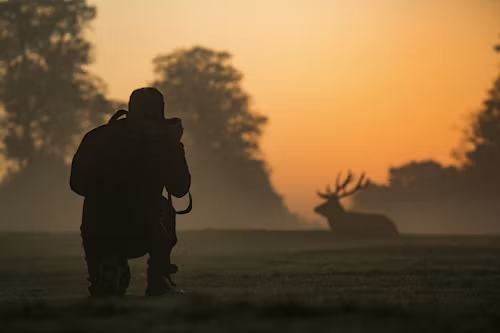
Why Wildlife Camera Settings Matter For Sharp Results?
Wildlife subjects rarely cooperate. Birds change direction instantly, predators move unpredictably, and lighting conditions shift constantly throughout the day.
A properly configured camera helps photographers react quickly without losing focus accuracy or exposure balance.
How Animal Movement Changes Exposure Decisions?
Fast-moving animals require significantly different settings than resting subjects.
| Wildlife Situation | Recommended Shutter Speed |
| Perched birds | 1/500s–1/1000s |
| Walking mammals | 1/1000s |
| Running animals | 1/1600s–1/2500s |
| Birds in flight | 1/2000s–1/4000s |
Faster shutter speeds freeze motion and improve detail retention, especially when using long telephoto lenses.
Why Light, Distance, And Lens Reach Affect Sharpness?
Wildlife photographers frequently work at long distances where even small movements can reduce image sharpness.
Important factors include:
- Subject distance
- Atmospheric conditions
- Lens stabilization
- Camera shake
- Available light
Understanding these variables helps photographers make better exposure decisions before wildlife activity begins.
While exposure settings influence image quality, autofocus performance often determines whether the subject is actually sharp.
Best Autofocus Settings For Wildlife Photography
Modern autofocus systems have transformed wildlife photography.
Instead of relying on single-point focus, photographers can now track moving animals across large portions of the frame.
Subject Detection And Tracking Modes
Animal detection technology has become one of the most valuable wildlife features available.
In fact, a major part of how to choose the best camera for wildlife photography is knowing whether the autofocus system can reliably track unpredictable animal movement.
Useful autofocus settings include:
- Continuous AF (AF-C)
- Animal Eye Detection
- Subject Tracking
- Zone AF
- Dynamic Area AF
These settings allow the camera to adjust focus continuously as the animal moves.
Focus Area Choices For Birds, Mammals, And Action
Different subjects benefit from different focus areas.
| Subject Type | Recommended Focus Area |
| Birds in flight | Wide Tracking Area |
| Large mammals | Zone AF |
| Fast action | Dynamic Tracking |
| Stationary wildlife | Single Point AF |
Selecting the right focus area improves consistency and reduces missed shots.
Strong autofocus is only part of the equation. Exposure settings determine whether that focus translates into a usable image.
Shutter Speed, Aperture, And ISO For Wildlife Shots
Exposure settings should prioritize the subject before anything else.
Wildlife photographers generally protect shutter speed first, then adjust aperture and ISO as needed.
Fast Action Settings For Birds And Running Animals
For action photography:
- Use wide apertures such as f/4 or f/5.6
- Keep shutter speeds above 1/2000s
- Allow Auto ISO to compensate for changing light
Fast-moving wildlife rewards speed over noise reduction.
Low-Light Settings For Forests, Dawn, And Dusk
Low-light wildlife photography often requires compromise.
Fast shutter speeds only help when the body supports the key features of the best camera for wildlife photography, including strong ISO control and responsive metering.
Many modern wildlife cameras deliver usable files at ISO values that were previously considered unacceptable.
Once exposure is optimized, shooting speed becomes the next advantage.
Burst Mode, Buffer, And File Format Decisions
Wildlife moments often occur within fractions of a second.
Burst shooting dramatically increases the chance of capturing the perfect frame.
When Continuous Shooting Helps
Burst mode is especially useful for:
- Birds taking off
- Predators hunting
- Animals interacting
- Flight sequences
- Sudden behavioral changes
Rather than relying on a single frame, photographers can select the strongest image afterward.
RAW Vs JPEG For Wildlife Detail
RAW files preserve substantially more information than JPEGs.
A fast body performs better when paired with the right support gear, so add-ons, lenses, and accessories for wildlife photography can directly affect keeper rate.
RAW files offer advantages such as:
| RAW Benefits | Why It Matters |
| Better dynamic range | Recover highlights and shadows |
| Improved color control | Natural wildlife colors |
| Greater editing flexibility | More post-processing options |
| Noise management | Better low-light results |
Capturing more frames is valuable, but field preparation often matters even more.
Field Workflow For Better Wildlife Results
Successful wildlife photographers spend more time preparing than shooting.
A consistent workflow improves reaction speed and reduces missed opportunities.
Pre-Setting Your Camera Before The Sighting
Before entering the field:
- Enable continuous autofocus
- Configure burst shooting
- Use Auto ISO limits
- Verify memory card capacity
- Check battery levels
Photographers often miss sudden behavior because setup, handling, and shooting workflow for wildlife photography matter as much as the camera’s technical specs.
Preparation creates confidence when opportunities appear unexpectedly.
Avoiding Common Sharpness Mistakes
Many wildlife images fail due to preventable errors.
Common mistakes include:
- Shutter speeds that are too slow
- Poor focus area selection
- Excessive cropping
- Handholding heavy lenses improperly
- Losing subject tracking
Blurry frames, missed focus, and slow response are usually practical issues, which makes common problems of the best camera for wildlife photography & their solutions useful for real field improvement.
Correcting these issues often improves results more than upgrading equipment.
Frequently Asked Questions
What Is The Best Autofocus Mode For Wildlife Photography?
Continuous autofocus with animal tracking is usually the most effective option because it maintains focus while subjects move.
Should I Use Auto ISO For Wildlife Photography?
Yes. Auto ISO helps maintain fast shutter speeds when lighting changes rapidly in outdoor environments.
What Shutter Speed Is Best For Birds In Flight?
Most birds in flight require at least 1/2000s, while faster species may benefit from 1/3200s or higher.
Is RAW Better Than JPEG For Wildlife Photography?
Yes. RAW files retain more image data and provide greater flexibility during editing.
Does Burst Mode Improve Wildlife Photography?
Yes. Burst shooting increases the likelihood of capturing critical moments during fast animal behavior.
Final Verdict
Sharp wildlife photography depends on much more than camera specifications. Autofocus configuration, shutter speed choices, burst shooting strategy, and field preparation all work together to improve results. Photographers who understand these settings consistently achieve higher keeper rates and make better use of their wildlife equipment.