
Back and leg fatigue in tall office workers often comes from poor chair fit, limited legroom, low desk height, and weak posture support. Taller users need seating and workspace adjustments that match longer legs, taller torsos, and broader ergonomic needs.
This article explains why fatigue happens, how to identify poor setup, which adjustments matter most, and how tall professionals can build a more comfortable workday without relying only on soft cushioning.
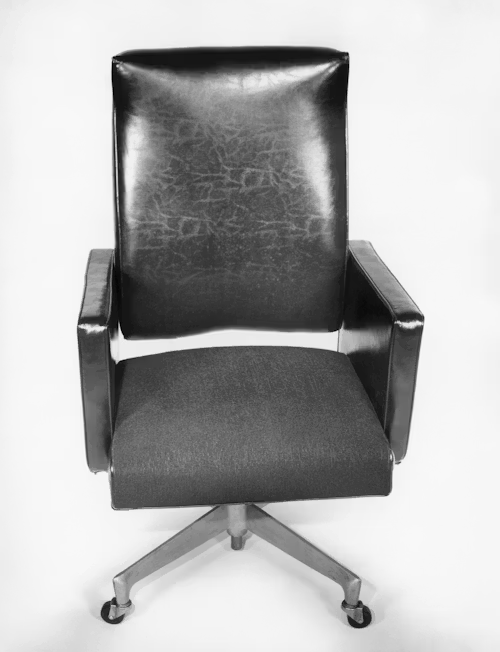
Why Do Tall Office Workers Feel Fatigue Faster?
Tall workers often sit in furniture designed around average body proportions. When the chair is too shallow, too low, or poorly aligned, the body compensates through awkward posture.
The lower back may work harder to stay upright. The thighs may lack support. The knees may sit too high or too far forward. Over time, these small mismatches create noticeable fatigue.
Common causes include:
- Short seat depth
- Low chair height range
- Poor lumbar placement
- Limited under-desk clearance
- Armrests that sit too low
- Monitor height that encourages slouching
Different types of office chairs for tall people solve these problems in different ways because tall users may need deeper seats, taller backrests, higher cylinders, or stronger adjustment systems.
Once the cause is clear, fatigue becomes easier to reduce.
Signs Your Chair Is Not Supporting Your Height
A chair does not have to feel painful immediately to be a poor fit. Many tall users only notice the problem after several hours of work.
Watch for these signs:
| Warning Sign | What It May Mean |
| Knees sit higher than hips | Chair may be too low |
| Thighs hang off the seat | Seat depth may be too short |
| Lower back feels unsupported | Lumbar support may be misplaced |
| Feet do not rest naturally | Seat height or desk height may be wrong |
| Shoulders feel tense | Armrests or desk may be too low |
People who sit for full workdays often need the same support priorities associated with the best office chair for tall person for long work hours, especially stable lumbar support, deeper seat depth, and reliable adjustability.
A better chair helps, but the surrounding workspace matters too.
How Chair Height Affects Back And Leg Fatigue?
Chair height is one of the first adjustments tall office workers should check. If the seat is too low, the knees may rise above the hips, forcing the pelvis backward and increasing lower-back strain.
If the chair is too high, the feet may lose stable floor contact. That can create pressure under the thighs and make the legs feel restless.
A better seated position usually includes:
- Feet flat on the floor
- Knees near a comfortable open angle
- Hips slightly level with or above the knees
- Thighs supported without pressure behind the knees
- Shoulders relaxed while typing
The goal is not a rigid posture. The goal is a position that lets the body stay balanced without constant effort.
From there, seat depth becomes the next major comfort factor.
Why Leg Support Matters During Long Sitting?
Leg fatigue often starts when the seat pan does not support enough of the thighs. Tall users with longer upper legs may feel as if they are perched on the chair instead of fully supported by it.
When thigh support is limited, pressure shifts toward the hips and lower back. This can make a chair feel tiring even when the padding seems comfortable at first.
Consistent support depends on the overall quality & performance of the office chair for tall person designs, especially how well the seat, frame, padding, and adjustment mechanisms hold up during extended daily use.
Good leg support should feel stable, not restrictive. The front edge should not dig behind the knees, and the user should still be able to shift positions naturally.
That balance reduces strain throughout the workday.
Desk Height And Legroom Problems Tall Workers Often Miss
A good chair can still feel uncomfortable if the desk is too low. Tall users may raise the chair for better leg positioning, only to find their knees hitting the underside of the desk.
This creates a difficult trade-off. Sitting lower may protect knee clearance but hurt posture. Sitting higher may improve hip alignment but create desk interference.
Tall workers should check:
- Knee clearance under the desk
- Monitor height
- Keyboard position
- Arm angle while typing
- Distance between chair and desk edge
A desk that is too low may force rounded shoulders and tight hips. A desk that is too high may raise the shoulders and strain the neck.
Better fatigue control comes from adjusting the full workstation, not only the chair.
Practical Adjustments To Reduce Daily Fatigue
Tall office workers can often improve comfort with a few targeted changes.
Start with these adjustments:
- Raise the chair until the hips and knees feel balanced.
- Keep the feet fully supported on the floor or a stable footrest.
- Adjust seat depth so the thighs are supported without knee pressure.
- Move lumbar support to meet the natural lower-back curve.
- Set armrests so the shoulders stay relaxed.
- Raise the monitor so the neck stays neutral.
- Leave enough desk clearance for knees and thighs.
Persistent hip pressure appears often among common problems of office chairs for tall person & their solutions because the issue usually comes from poor seat depth, low chair height, or limited adjustability rather than simple padding.
After these changes, the body should feel supported without being locked into one position.
Better Movement Habits For Tall Desk Workers
Even a well-fitted chair cannot replace movement. Tall workers may experience more stiffness because longer limbs often need more room to stretch and reposition.
Simple habits help reduce fatigue:
- Stand briefly every 30 to 60 minutes
- Stretch hip flexors during breaks
- Walk for a few minutes between focused work sessions
- Change sitting position without slouching
- Avoid keeping the knees bent tightly for hours
- Reset posture after phone calls or meetings
Movement improves circulation and reduces pressure buildup. It also helps users notice when the chair needs readjustment.
Comfort should be maintained throughout the day, not set once and forgotten.
When Accessories Can Help?
Accessories can improve comfort when the chair and desk are close to the right fit but still need refinement.
Useful options may include:
| Accessory | How It Helps |
| Footrest | Supports feet if chair height must be raised |
| Lumbar cushion | Improves lower-back contact |
| Seat cushion | Adds support if the seat is too firm |
| Monitor riser | Reduces neck bending |
| Keyboard tray | Improves arm and shoulder position |
Accessories should solve a specific problem. They should not be used to cover up a chair that is clearly too small, unstable, or poorly proportioned.
If multiple accessories are needed just to make the chair usable, a better-fitting chair may be the smarter option.
How To Maintain Comfort Over Time?
A chair that feels good during the first week may not stay supportive if the padding compresses, screws loosen, or adjustment controls weaken.
Tall users should check their setup every few months. Look for sinking seat height, worn cushioning, loose armrests, or reduced lumbar support.
Durable adjustment systems play a major role in the longevity & long-term value of office chair for tall person investments because taller users often place more demand on seat depth, lift range, frame stability, and recline control.
Long-term comfort depends on both the original fit and ongoing maintenance.
FAQs
Why Do Tall People Get Leg Fatigue In Office Chairs?
Tall people often get leg fatigue because the seat is too short, too low, or poorly aligned. This reduces thigh support and increases pressure around the hips and knees.
Should Tall Office Workers Use A Footrest?
Yes, if the chair must be raised for desk alignment and the feet no longer rest flat. A stable footrest helps reduce thigh pressure and improves lower-body support.
Can A Better Chair Reduce Back Fatigue?
Yes. A properly fitted chair can reduce back fatigue by supporting the lower back, thighs, hips, and shoulders in a more balanced seated position.
Is Seat Depth Important For Reducing Leg Fatigue?
Yes. Seat depth affects how much thigh support the user receives. Too little depth can increase hip pressure, while too much depth can press behind the knees.
How Often Should Tall Workers Take Breaks From Sitting?
Tall workers should usually move every 30 to 60 minutes. Short standing, walking, or stretching breaks help reduce stiffness, pressure buildup, and circulation discomfort.
Final Verdict
Tall office workers can reduce back and leg fatigue by improving chair fit, desk alignment, leg support, and daily movement habits. The right setup should support longer body proportions without forcing the user into cramped or awkward positions.
A comfortable workday depends on more than soft padding. Better seat depth, proper height, stable lumbar support, and regular adjustment habits create a workspace that feels supportive for hours, not just the first few minutes.