
Solar vs wired motion sensor lights is a common comparison among homeowners looking to improve outdoor security while balancing installation costs, reliability, and energy efficiency. Both options provide automatic illumination when movement is detected, but they differ significantly in power source, brightness consistency, maintenance requirements, and long-term performance.
This guide compares solar and wired motion sensor lights in practical, real-world situations. You’ll learn where each type performs best, how operating costs differ, and which option delivers the best value for different properties.
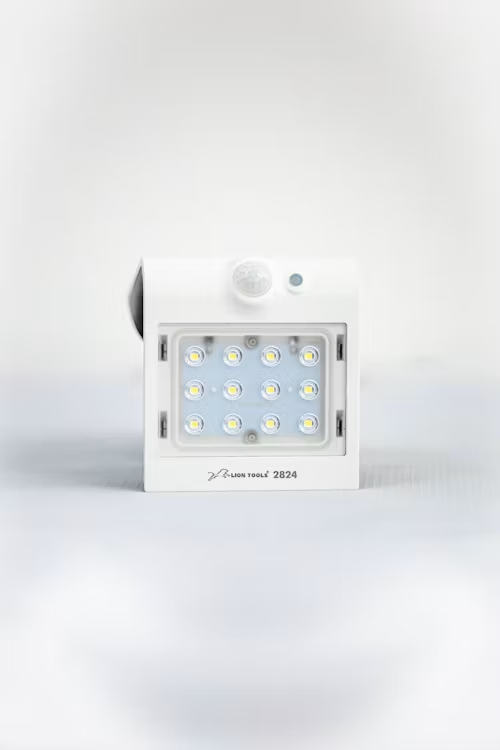
Solar And Wired Motion Sensor Lights At A Glance
At first glance, both lighting systems appear similar. They activate when motion is detected and help illuminate outdoor areas such as driveways, pathways, garages, and entrances.
The primary difference is how they receive power.
Solar motion lights store energy collected during daylight hours and use rechargeable batteries to operate after dark. Wired systems draw electricity directly from the home’s electrical supply, providing consistent power regardless of weather conditions.
The table below highlights the key differences.
| Feature | Solar Motion Lights | Wired Motion Lights |
| Power Source | Solar Panel & Battery | Household Electricity |
| Installation Difficulty | Easy | Moderate To High |
| Operating Cost | Very Low | Low |
| Brightness Consistency | Weather Dependent | Consistent |
| Maintenance | Battery Replacement | Minimal |
| Ideal For | Remote Locations | Permanent Security Coverage |
Understanding these differences helps homeowners narrow their options before evaluating performance in greater detail.
Energy Use, Brightness, And Running Costs
Energy efficiency is often one of the main reasons people consider solar-powered lighting.
Since solar fixtures rely on sunlight rather than grid electricity, operating costs remain extremely low. However, efficiency alone does not determine overall performance.
Many buyers searching for the most energy efficient outdoor motion sensor lights focus primarily on power consumption, but sensor accuracy, charging efficiency, and battery quality also influence real-world results.
A highly efficient light that fails to activate reliably offers limited security benefits.
When Solar Lights Save More Energy?
Solar lights excel in locations with strong daily sunlight exposure. Because they generate their own electricity, they can operate for years with little impact on utility bills.
Homeowners evaluating the best outdoor motion sensor lights for energy saving often find solar models particularly attractive for pathways, gardens, detached sheds, and locations where electrical wiring would be expensive.
Their biggest advantage is energy independence.
Why Wired Lights Usually Stay Brighter?
Wired systems generally maintain higher and more consistent brightness levels.
Unlike solar lights, which rely on stored battery power, wired fixtures can sustain strong illumination throughout the night without concerns about charging conditions or battery depletion.
For properties requiring dependable overnight performance, wired systems frequently provide greater confidence.
While power source affects performance, the type of motion sensor light also matters.
Understanding Different Motion Sensor Light Types
Homeowners often focus on power source while overlooking the broader range of lighting categories available.
The various types of outdoor motion sensor lights differ not only in power delivery but also in sensor technology, smart functionality, and installation flexibility.
Solar Motion Sensor Lights
Solar lights are ideal for locations where wiring is difficult or expensive. Modern models have improved significantly in brightness and battery performance.
They work particularly well in sunny climates and moderate-use areas.
Battery-Powered Motion Lights
Battery-powered units offer simple installation and portability. They are useful for temporary security needs, rental properties, and areas without electrical access.
However, battery replacement costs can accumulate over time.
Hardwired Motion Sensor Lights
Hardwired systems provide dependable brightness and continuous performance. They are commonly used around garages, driveways, and large outdoor spaces where security coverage is a priority.
Smart Motion Sensor Lights
Smart lighting systems integrate with home automation platforms and mobile apps. They often allow remote control, scheduling, notifications, and advanced customization.
Understanding these categories makes it easier to determine which lighting solution fits specific household needs.
Motion Sensor Lights Compared With Other Outdoor Lighting
Traditional outdoor lighting remains popular, particularly for decorative and landscape applications.
However, the discussion around outdoor motion sensor lights vs alternatives often centers on efficiency and practicality.
Constantly illuminated fixtures consume more electricity and may require more frequent bulb replacements. Motion sensor lights activate only when needed, reducing unnecessary energy use while still providing security benefits.
Dusk-to-dawn lighting offers continuous visibility, but motion activation adds an immediate response element that many homeowners prefer for security purposes.
Each lighting strategy serves different goals depending on the property’s needs.
Choosing The Right Option For Different Areas
Different outdoor spaces often benefit from different lighting approaches.
Driveways, garages, and large backyards generally benefit from wired systems because of their consistent brightness and dependable operation.
Pathways, garden features, fences, and detached structures often work well with solar lights because installation is simpler and operating costs remain extremely low.
Rather than choosing one technology for an entire property, many homeowners combine both systems to maximize efficiency and coverage.
A mixed approach frequently delivers the best overall results.
Long-Term Value And Ownership Costs
The upfront purchase price rarely tells the complete story.
Solar fixtures may cost less to operate but often require periodic battery replacement. Battery quality, charging efficiency, and weather exposure all influence long-term performance.
Wired systems typically involve higher installation costs but can provide more predictable performance over many years.
When evaluating the longevity and long-term value of outdoor motion sensor lights, homeowners should consider:
- Installation expenses
- Electricity consumption
- Battery replacement costs
- Weather resistance
- Fixture lifespan
- Maintenance requirements
Looking beyond the purchase price often leads to a more accurate assessment of overall value.
Which Option Is Better For Home Security?
For maximum reliability, wired motion sensor lights usually hold an advantage. Their continuous power supply allows them to deliver consistent brightness regardless of weather conditions.
Solar systems remain highly effective in many situations, particularly where sunlight exposure is reliable and installation simplicity is important.
The better choice ultimately depends on property layout, available power access, climate conditions, and security goals.
Frequently Asked Questions
Are solar motion sensor lights bright enough for security?
Yes. Many modern solar models provide excellent brightness, though performance may vary based on battery capacity and daily sunlight exposure.
Do wired motion sensor lights use a lot of electricity?
No. LED-based wired motion lights are generally energy efficient because they operate only when motion is detected.
Which lasts longer, solar or wired motion sensor lights?
Wired systems often last longer overall because they do not depend on rechargeable batteries that gradually lose capacity.
Can solar motion sensor lights work during cloudy weather?
Yes, but charging efficiency may decrease, which can reduce runtime and brightness during extended periods of poor weather.
Is professional installation required for wired motion lights?
Not always. However, many homeowners prefer professional installation when new wiring or electrical modifications are needed.
Final Verdict
Solar and wired motion sensor lights both offer valuable security benefits, but each serves different needs. Solar models provide excellent energy savings and installation flexibility, while wired systems deliver unmatched consistency and brightness. Choosing the right option depends on your property’s layout, security priorities, and long-term ownership goals.