
Screen time for toddlers means the use of tablets, phones, televisions, and other digital devices during early childhood. When managed with care, it can support early learning, language development, problem-solving, creativity, and digital familiarity without replacing hands-on play.
This article explains how parents can create healthier screen habits, choose better content, avoid common mistakes, and use digital learning in a balanced way. The goal is to make screen time more intentional, educational, and easier to manage at home.
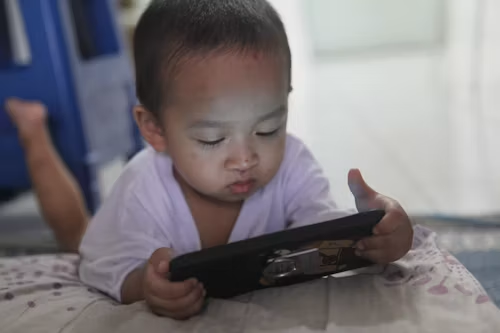
Why Screen Time Habits Matter During Early Childhood?
Toddlers learn through repetition, movement, imitation, conversation, and sensory experience. Digital tools can support that process, but they work best when they are used as one part of a broader learning environment.
A tablet should not become a substitute for real-world play, outdoor activity, reading, or family interaction. Instead, it can help reinforce early skills when the content is age-appropriate and the child is guided by an adult.
How Toddlers Learn Through Interactive Content?
Interactive content is usually more valuable than passive viewing because it encourages the child to respond, think, and participate. A toddler matching colors, identifying animals, repeating letter sounds, or solving simple puzzles is more engaged than a child watching continuous videos without interaction.
Good digital learning experiences often include short activities, clear instructions, repetition, and immediate feedback. These features help toddlers stay focused without becoming overwhelmed.
The Difference Between Passive And Active Screen Time
Passive screen time usually involves watching videos or animations with little involvement from the child. Active screen time requires participation, such as tapping, speaking, matching, choosing, tracing, or answering.
| Type Of Screen Time | What It Looks Like | Learning Value |
| Passive Screen Time | Watching videos or cartoons | Lower when unsupervised |
| Active Screen Time | Solving puzzles, tracing letters, matching shapes | Higher when age-appropriate |
| Shared Screen Time | Parent and child using content together | Stronger for language and understanding |
The healthiest approach is not only about limiting time. It is also about improving the quality of what happens during that time.
Building A Healthy Digital Routine
A healthy digital routine gives toddlers structure. Children usually respond better when screen time happens at predictable times instead of being offered randomly throughout the day.
Many parents researching how to choose tablet for toddlers focus heavily on content libraries while overlooking screen management tools that help establish healthier daily routines.
Setting Time Limits Without Daily Battles
Time limits work best when they feel consistent rather than sudden. Parents can reduce resistance by giving a short warning before screen time ends and moving the child into another familiar activity afterward.
For example, a toddler may handle the transition better when screen time is followed by snack time, story time, outdoor play, or a simple hands-on activity. The key is to make the end of screen time feel like part of the routine rather than a punishment.
Creating Screen-Free Family Activities
Screen-free time should not feel like empty time. Toddlers need physical movement, pretend play, drawing, building, reading, and conversation to develop motor skills, creativity, emotional regulation, and social confidence.
A balanced home routine might include digital learning for a short period, followed by activities that involve movement and real-world interaction. This balance helps children see technology as one useful tool rather than the center of the day.
Educational Content That Supports Development
Educational content should match the toddler’s age, attention span, and developmental stage. The best options are simple, interactive, and easy for a child to understand without constant frustration.
Language And Literacy Activities
Language-based apps can introduce letter sounds, vocabulary, storytelling, listening skills, and early word recognition. These tools are most helpful when parents talk about what is happening on screen and repeat the same ideas offline.
Structured literacy activities often explain why parents prioritize a best tablet for toddlers for an early learning focus approach when selecting educational technology.
Early Math And Problem-Solving Skills
Simple math and logic activities can support counting, sorting, matching, memory, sequencing, and pattern recognition. These skills are useful because they build early problem-solving habits before formal schooling begins.
Educational progress tracking is becoming one of the key features of tablets for toddlers that parents appreciate most because it helps them understand what their child is practicing and where extra support may be needed.
A strong learning app should feel playful, but it should still have a clear developmental purpose.
Common Screen Time Mistakes Parents Make
Most screen-time problems come from weak routines, unsuitable content, or lack of supervision rather than the device itself. Even a high-quality tablet can create problems when it is used without boundaries.
Overreliance On Entertainment Apps
Entertainment apps are not always harmful, but they can become a problem when they dominate a toddler’s screen time. Fast-paced videos, endless autoplay, and highly stimulating games can make slower learning activities feel less appealing.
Parents can create a healthier balance by keeping educational apps easy to access and limiting entertainment content to specific times. This helps toddlers understand that screens can be used for learning, creativity, and relaxation, not only instant amusement.
Lack Of Parent Participation
Toddlers learn more when parents stay involved. A parent asking simple questions, naming objects, repeating sounds, or connecting a digital lesson to real life can make screen time more meaningful.
Excessive unsupervised usage often creates concerns similar to those addressed in safety, maintenance, and best practices for toddler tablets, where supervision remains an important part of healthy device use.
Parent participation does not need to be complicated. Even a few minutes of shared attention can improve comprehension and reduce the risk of mindless screen use.
Encouraging Long-Term Healthy Technology Habits
Healthy technology habits should begin early because toddlers quickly learn patterns. If a screen is always used to stop boredom, calm frustration, or fill silence, the child may begin to depend on it emotionally.
A better approach is to teach that tablets have specific purposes. They can be used for learning, stories, creativity, and short entertainment sessions, but they should not replace sleep routines, meals, outdoor activity, or family conversation.
Teaching Digital Boundaries Early
Simple boundaries help toddlers understand when screens are available and when they are not. Device-free meals, screen-free bedtime routines, and limited background video exposure can all support better behavior and sleep habits.
Boundaries should be calm and consistent. When parents treat screen rules as normal household expectations, toddlers are more likely to accept them over time.
Balancing Technology With Physical Play
Physical play remains essential for toddler development. Running, climbing, stacking blocks, drawing, pretending, and exploring objects strengthen skills that screens cannot fully replace.
The strongest benefits of tablet for toddlers usually appear when technology complements real-world activities instead of competing with them.
A tablet can support early learning, but healthy development still depends on movement, social interaction, imagination, and hands-on discovery.
Frequently Asked Questions
Is Screen Time Bad For Toddlers?
No. Screen time can be useful when it is age-appropriate, limited, supervised, and balanced with offline activities.
How Much Screen Time Should A Toddler Have Daily?
Toddlers usually benefit most from short, high-quality sessions rather than long periods of continuous screen use.
Are Educational Apps Better Than Videos?
Yes. Educational apps are often better because they encourage participation, problem-solving, and active learning.
Should Parents Sit With Toddlers During Screen Time?
Yes. Parent involvement helps toddlers understand content better and connect digital lessons to real-life learning.
Can Tablets Help Toddlers Learn?
Yes. Tablets can support early learning when they offer age-appropriate content, interactive activities, and strong parental controls.
Final Verdict
Screen time for toddlers works best when it is intentional, limited, and connected to real learning. Parents do not need to avoid technology completely, but they should guide how, when, and why it is used.
A toddler tablet becomes more valuable when it supports language, creativity, problem-solving, and healthy routines. The goal is not just to reduce screen time, but to make digital time more meaningful, balanced, and developmentally useful.