
AI video creation workflows are structured production processes that combine artificial intelligence with planning, editing, and publishing to create videos more efficiently. They help businesses, marketers, educators, and creators reduce repetitive work while maintaining consistent quality across multiple projects.
This guide explains how modern AI video workflows function, where they outperform traditional production methods, and what practical strategies help teams produce better videos faster without sacrificing creativity or editorial standards.
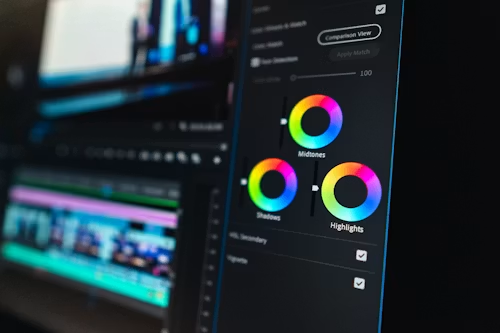
Why Modern AI Video Workflows Matter?
Creating professional videos once required large production teams, specialized editing skills, and significant time investments. Today, AI-powered production tools automate many repetitive tasks while allowing creators to focus on storytelling, messaging, and creative decisions instead of technical execution.
Whether producing marketing campaigns, training materials, product demonstrations, or social media content, a structured workflow minimizes delays and improves consistency. Rather than starting every project from scratch, teams can reuse templates, automate repetitive edits, and standardize production processes.
From Idea To Finished Video
Every successful AI video project begins long before any visuals are generated. The planning stage determines whether automation becomes an advantage or a source of extra revisions.
A practical workflow usually includes:
- Defining the video’s objective before writing prompts
- Creating a structured script with logical scene progression
- Preparing brand assets in advance
- Identifying the intended audience
- Establishing tone, pacing, and visual style
When these elements are planned first, AI systems produce significantly better initial drafts, reducing editing time later.
Where Traditional Editing Slows Production?
Traditional video production often involves numerous manual steps that consume valuable time.
Some of the largest bottlenecks include:
- Manual timeline editing
- Asset organization
- Voice synchronization
- Caption creation
- Repeated rendering cycles
- Team collaboration delays
These repetitive activities frequently consume more production time than the creative work itself. AI reduces much of this operational overhead through automation while leaving creative decisions under human control.
While workflow efficiency creates the foundation, choosing software that supports those processes is equally important. Many production delays happen because teams overlook how to choose AI video generators that actually match their workflow requirements instead of focusing only on impressive demonstrations.
Transitioning from understanding workflow challenges naturally leads to organizing a production process that minimizes unnecessary revisions while maximizing creative output.
Building An Efficient AI Video Creation Process
An efficient workflow isn’t built around software alone. It combines planning, automation, review cycles, and collaboration into a repeatable system that scales as production demands increase.
Organizations producing dozens—or even hundreds—of videos each month often rely on standardized workflows rather than individual editing habits. This consistency shortens onboarding, improves collaboration, and reduces costly production mistakes.
Planning Scripts And Visual Assets
Well-prepared inputs consistently generate better AI outputs.
Before generating a single frame, successful teams typically prepare:
- Complete scripts
- Brand guidelines
- Logo files
- Approved fonts
- Image libraries
- Product photos
- Music preferences
- Voice requirements
Investing extra effort during planning often eliminates multiple editing rounds later.
The speed of production also depends heavily on the key features of AI video generators, particularly capabilities like automated scene generation, script assistance, multilingual voice synthesis, template libraries, and intelligent asset organization. These features reduce repetitive work while allowing creators to focus more on messaging and storytelling.
Automating Editing Without Losing Creative Control
Automation should remove repetitive work, not creative decision-making. The best workflows allow AI to generate a strong first draft while creators refine pacing, storytelling, branding, and emotional impact.
Instead of editing every frame manually, professionals review AI-generated scenes, adjust transitions, improve timing, and personalize visual elements. This approach dramatically shortens production time without making videos feel generic.
Teams often benefit from assigning responsibilities across the production process:
| Workflow Stage | AI Handles | Human Reviews |
| Script Drafting | Initial content generation | Tone, messaging, accuracy |
| Scene Creation | Visual generation | Brand consistency |
| Voiceover | AI narration | Pronunciation and pacing |
| Captions | Automatic subtitles | Formatting and corrections |
| Music Selection | Suggested background tracks | Emotional fit and licensing |
| Final Edit | Rendering and exports | Overall quality assurance |
A balanced workflow treats AI as a productivity tool rather than a replacement for creative expertise.
While automation accelerates production, maintaining high standards requires consistent review procedures throughout every project.
Maintaining Quality Across Every Project
Fast production has little value if quality becomes inconsistent. Successful organizations develop review systems that ensure every video meets the same editorial standards regardless of who created it.
Quality control should evaluate:
- Brand consistency
- Visual accuracy
- Audio synchronization
- Caption correctness
- Messaging clarity
- Overall viewer experience
Reviewing these areas before publishing reduces revisions after release and strengthens audience trust.
Consistency In Branding
Viewers quickly recognize brands that maintain consistent visual identity across every piece of content.
Consider creating standardized resources such as:
- Logo placement templates
- Color palettes
- Intro and outro sequences
- Typography guidelines
- Approved voice styles
- Motion graphic templates
Following AI video generator best practices helps maintain that consistency because automation performs best when supported by clear creative standards instead of constantly changing instructions.
Reviewing AI Outputs Before Publishing
Even highly capable AI systems occasionally produce unexpected errors.
Common review checkpoints include:
- Mispronounced names
- Inaccurate subtitles
- Visual inconsistencies
- Missing branding elements
- Poor scene transitions
- Incorrect timing
Experienced editors rarely publish the first generated version. Instead, they perform a structured review that catches issues before the audience sees them. During these final checks, teams frequently encounter common problems of AI video generators & their solutions, such as lip-sync mismatches or inconsistent character appearances, allowing small corrections before distribution.
As production demands continue growing, organizations increasingly look beyond standalone software toward connected creative ecosystems.
Future Workflow Improvements
Artificial intelligence continues evolving from individual editing tools into complete production platforms that connect planning, collaboration, editing, publishing, and analytics.
Future workflows are expected to become increasingly adaptive, reducing manual coordination while improving creative flexibility.
AI Collaboration Across Teams
Modern production teams often include marketers, designers, writers, editors, and project managers working simultaneously.
Integrated AI platforms make collaboration easier by providing:
- Shared asset libraries
- Version history
- Collaborative editing
- Automated approvals
- Cloud-based production
- Centralized project management
As organizations expand content operations, add-ons, integrations, and enhancements for AI video generators frequently become essential for connecting video production with marketing platforms, cloud storage, analytics dashboards, and collaborative workspaces.
Continuous Optimization
Publishing a video is no longer the final step.
Leading organizations continually improve future productions by analyzing:
- Audience retention
- Click-through rates
- Watch time
- Engagement metrics
- Conversion performance
- Viewer feedback
These insights help refine scripts, pacing, visuals, and production workflows, creating an ongoing cycle of improvement rather than isolated projects.
As optimization becomes continuous, AI video workflows evolve into scalable systems capable of supporting growing content demands without sacrificing consistency.
Frequently Asked Questions
The workflow strategies above naturally raise a few practical questions that creators often ask before implementing AI-powered production processes.
Is an AI video workflow suitable for beginners?
Yes. Structured workflows simplify production by breaking projects into manageable stages, making it easier for beginners to create professional-looking videos consistently.
Can AI completely replace video editors?
No. AI automates repetitive production tasks, but creative direction, storytelling, branding, and quality assurance still benefit from human expertise.
How much time can AI workflows save?
Time savings vary, but many creators reduce production time significantly by automating scripting, scene generation, captions, voiceovers, and repetitive editing tasks.
Why is planning important before using AI video tools?
Planning provides clear instructions for AI systems, resulting in better first drafts, fewer revisions, and more consistent final videos.
Do businesses benefit more from standardized workflows?
Yes. Standardized workflows improve collaboration, maintain branding consistency, reduce production errors, and make scaling content creation much more efficient.
Modern AI video production succeeds when automation supports creativity instead of replacing it, making structured workflows valuable for creators at every experience level.
Final Verdict
An effective AI video creation workflow combines thoughtful planning, intelligent automation, and consistent quality control into a repeatable production system. Organizations that standardize their processes produce content faster while maintaining strong creative standards. As AI platforms continue advancing, well-designed workflows will remain the foundation for scalable, efficient, and high-quality video production.